
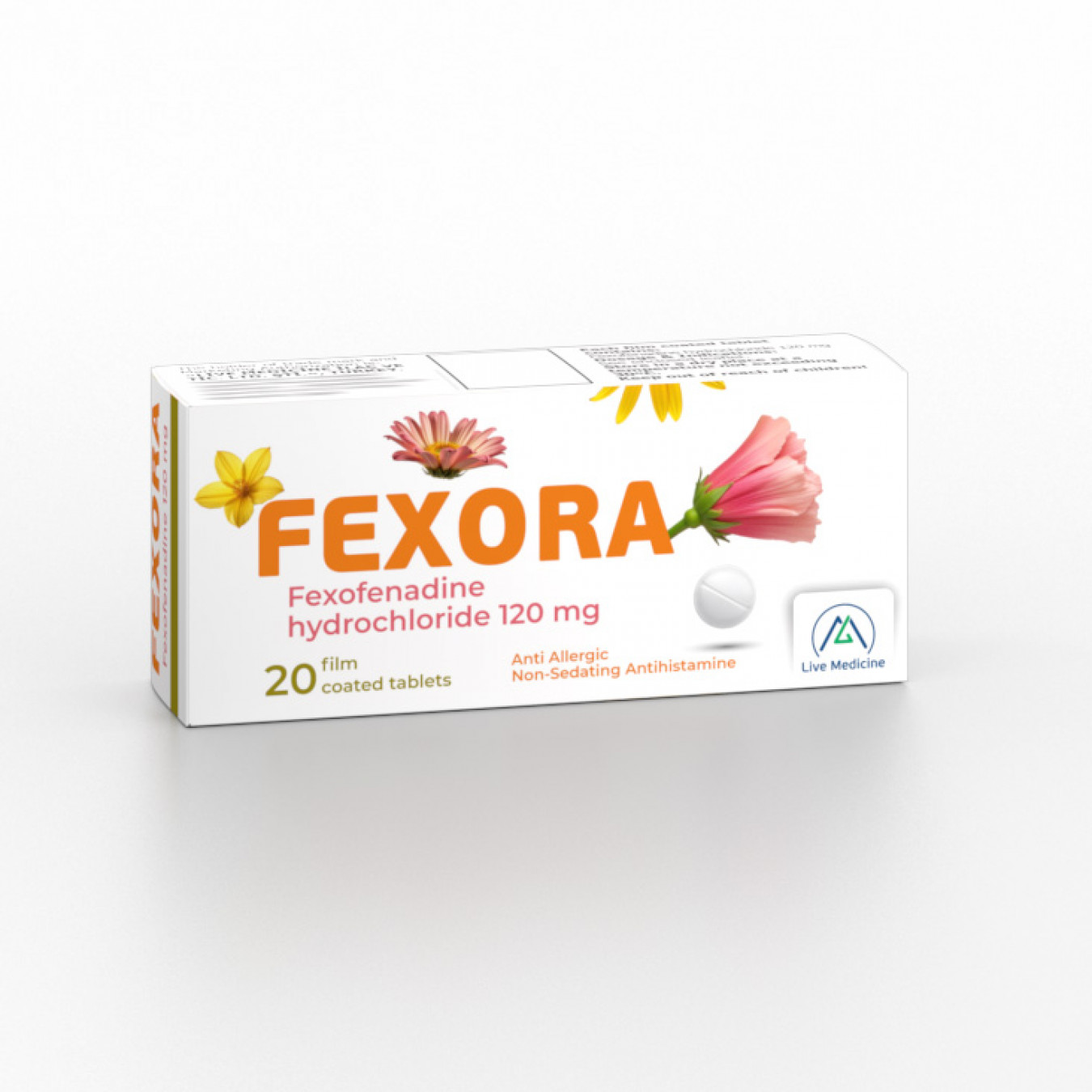
FEXORA [Fexofenadine] 120 mg Film-coated tablets
Instructions for the medical use of the medicinal product
FEXORA
Tradename
Fexora, Фексора
International non-proprietary name
Fexofenadine, Фексофенадин
Dosage form
Film-coated tablets.
Composition per 1 tablet
active substance: fexofenadine hydrochloride 120 mg;
excipients: corn starch, sucrose, magnesium stearate.
Description
Round, film-coated tablets, rose in colour.
Pharmacotherapeutic group
Systemic antihistamines.
АТХ Code: R06AX26
Pharmacological properties
Pharmacodynamics
Fexofenadine hydrochloride is an H1-histamine receptor blocker with virtually no sedative effect. Fexofenadine is a pharmacologically active metabolite of terfenadine. The antihistamine effect of the drug appears 1 hour aſter administration, reaches a maximum aſter 6 hours and lasts for 24 hours. No tolerance develops aſter 28 days of administration. When taken orally in doses from 10 mg to 130 mg, there is a linear dose-effect relationship. For 24-hour effectiveness of the drug (in allergic rhinitis), a dose of 120 mg is sufficient. At a dose of up to 240 mg, the drug does not cause changes in the QT interval.
Pharmacokinetics
Fexofenadine hydrochloride is rapidly absorbed from the gastrointestinal tract aſter oral administration, the time to reach maximum concentration (TСmax) is 1-3 hours. The average value of maximum concentration (Cmax) aſter taking a dose of 120 mg is 289 ng / ml, and aſter taking a dose of 180 mg - approximately 494 ng / ml. Plasma protein binding is 60-70%. Fexofenadine is slightly (5%) subject to hepatic and extrahepatic metabolism. Biphasic elimination. The half-life (T1 / 2) aſter repeated administration is from 11 to 15 hours. In patients with moderate (creatinine clearance 41-80 ml / min) and severe (11-40 ml / min) renal insufficiency T1 / 2 increases by 59 and 72%, respectively; in patients on hemodialysis, T1 / 2 increases by 31%. Pharmacokinetics with single and multiple administration of fexofenadine (up to 120 mg twice daily) is linear. It is excreted mainly (80%) with bile, up to 10% of the dose taken is excreted unchanged in urine.
Indications for use
Elimination of symptoms associated with seasonal allergic rhinitis, symptomatic treatment of chronic urticaria.
Contraindications
Hypersensitivity to fexofenadine and other components of the drug, pregnancy, breastfeeding, children under 12 years of age.
Method of administration and dosage
The drug is taken orally. The tablets should be swallowed whole with a small amount of water.
The recommended dose for adults and children 12 years of age and older is 120 mg once daily.
Special instructions and precautions
Use with caution in elderly patients, in patients with renal or hepatic insufficiency.
The efficacy and safety of fexofenadine in children under 6 years of age have not been studied.
Based on the pharmacodynamic profile and known side effects, it can be assumed that the effect of fexofenadine on the ability to drive vehicles and activities requiring increased concentration is unlikely. Objective studies have shown that fexofenadine does not have a significant effect on the functions of the central nervous system. However, it is recommended to check the individual reaction before starting to drive vehicles or other potentially dangerous activities.
Side effect
From the digestive system: nausea, diarrhea.
From the nervous system: headache, drowsiness, dizziness, fatigue.
From the cardiovascular system: palpitations.
Allergic reactions: rash, urticaria, itching, angioedema, shortness of breath, systemic anaphylactic reactions.
If any of the side effects listed in the instructions worsen, or you notice any other side effects not listed in the instructions, tell your doctor.
Interaction with other medicinal products
Fexofenadine is not biotransformed in the liver and therefore does not interact with other drugs that undergo hepatic metabolism.
It has been shown that with the simultaneous use of fexofenadine with erythromycin or ketoconazole, the concentration of fexofenadine in the plasma increases by 2-3 times, which is apparently associated with an increase in absorption from the gastrointestinal tract and a decrease in either bile excretion or gastrointestinal secretion. At the same time, no changes in the QT interval were observed.
When taking antacids containing aluminum or magnesium 15 minutes before taking fexofenadine, a decrease in its bioavailability was observed, most likely due to binding in the gastrointestinal tract. The recommended time interval between taking fexofenadine and antacids containing aluminum or magnesium hydroxide is 2 hours.
Does not interact with omeprazole, with drugs metabolized in the liver.
Overdose
Symptoms: dizziness, drowsiness and dry mouth.
Treatment: symptomatic and supportive therapy. Hemodialysis is ineffective.
Storage conditions
Store in a dry place at a temperature not exceeding 30°C. Keep out of reach of children.
Shelf life
3 years. Do not use aſter the expiration date stated on the package.
Vacation conditions
Without prescription.
Release form
10 tablets in a PVC/aluminium blister. 2 blisters together with instructions for use in a cardboard box.